10 Outdoor Science Activities for Kids Using a Portable Scope
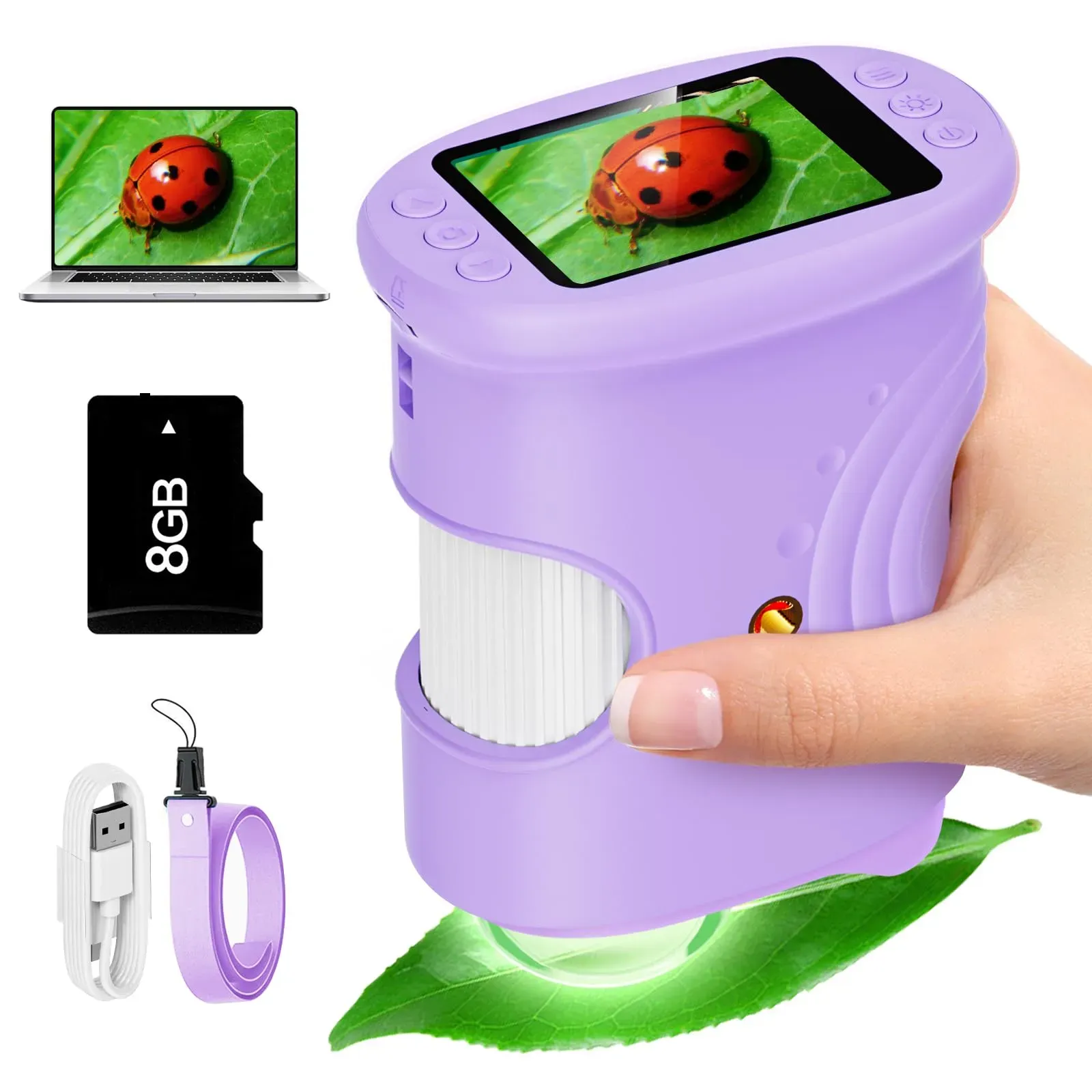
In short: here are ten outdoor science activities for UK children built around one tool — a portable digital microscope with a built-in screen. Each one works for a home-education morning, an after-school club or a library holiday session: no laptop, no slides to prepare, and the screen means the whole group sees the same discovery at the same moment instead of queueing for an eyepiece.
Why a screen beats an eyepiece for group sessions
Anyone who has run a science session for six-year-olds knows the eyepiece problem: one child looks, five wait, and by the third turn the specimen has been knocked out of focus and the group has scattered. A handheld scope with a screen — such as the Bebanghan 1000X handheld digital microscope (£32.00 inc. VAT, ages 6+, rechargeable battery, slides kit included) — flips that: the image is public, the discussion is shared, and children take turns driving rather than merely waiting. Photos saved on the device become the session's record for a wall display or home-ed portfolio, transferred to a Windows 10/11 computer afterwards over USB.
Two honest limits before the list: these scopes show surfaces — leaf veins, insect wings, sand grains — not bacteria or cells (that needs a lab-style compound microscope), and they are not waterproof, so in classic UK drizzle keep the scope under a lid or in a sandwich bag between observations.
The ten activities
1. Leaf safari
Collect five different leaves, then compare upper and lower surfaces on screen. Children hunt for veins, hairs and the tiny pores (stomata) that let the plant breathe. Ask the group to guess which leaf came from a sunny spot and which from shade before checking.
2. Minibeast close-ups (catch and release)
A woodlouse or beetle in a clear pot sits still long enough for wing cases, antennae and leg joints. Rule for the group: every creature goes back where it was found within ten minutes. That rule itself is good science-club practice.
3. Pond-dip debris tray
After a supervised pond dip, examine what is left in the tray: snail shells, caddis cases, water-plant fragments. The scope stays dry — magnify items lifted out on a spoon onto a white lid. Adult supervision near water throughout.
4. Bark and lichen survey
Lichens are living air-quality flags. Compare crusty, leafy and beardy lichens on two or three trees and let the group rate their patch of park. Photograph each lichen for a simple recording sheet back indoors.
5. Soil detectives
A teaspoon of soil from the flower bed vs one from under the hedge: children pick out sand grains, root fibres, seed cases and the occasional springtail. Good for the "soil is not just dirt" conversation every allotment-adjacent club eventually has.
6. Feather engineering
A found feather shows barbs zipping together like Velcro — unzip a section with a fingernail, magnify, then let a child "repair" it by smoothing and check the fix on screen. (UK etiquette: look, photograph, leave raptor feathers where they lie.)
7. Sand and stone sorting
Sand from a play tray, a beach trip or a path edge becomes a mixed jewel box at 50x: quartz grains, shell fragments, brick dust. Older children can sort grains by shape and argue about which travelled furthest — rounder usually means further.
8. Flower forensics
Open a spent bloom and find the pollen. Compare two flowers' pollen colour and grain shape, then look at a visiting bee's flight path and ask which flower it favoured. Ties neatly into pollinator topic work.
9. Seed pod mechanisms
Dandelion clocks, sycamore keys, cleavers ("sticky willy") — each is a dispersal machine. Magnify the hooks on a cleaver seed and the group instantly understands how it hitch-hikes on jumpers and dog fur.
10. Weather-wear walk
End with materials science: magnify a rusty gate flake (photograph, do not handle sharp rust), peeling paint, weathered rope fibres and a spider's silk line on a fence. "What did the weather do to this?" is a question that works from age six to adult.
Running it smoothly with a group
- One driver, many viewers: rotate who holds the scope each activity — the screen keeps everyone else involved.
- Charge beforehand: one full charge covers a session; there is no cable-to-laptop tether outdoors.
- Photograph everything: saved images become the session log, transferred over USB afterwards — home educators can drop them straight into portfolio evidence.
- Cost per group: at £32.00 a unit, one scope per four children is realistic for a club budget; start with one and see how far turn-taking stretches before buying more (30-day returns cover a mis-guess).
Choosing a unit for club use — and what the magnification numbers honestly mean — is covered in our handheld digital microscope buying guide.
Frequently Asked Questions
How many children can share one portable scope?
About four per unit works in practice: one drives, the rest watch the screen, and roles rotate each activity. For bigger clubs, two units per eight children keeps everyone involved without queues.
Can we look at pond creatures with it?
Snail shells, caddis cases and visible minibeasts, yes — magnified on a spoon or white lid, with the scope kept dry. Truly microscopic pond life needs a lab-style compound microscope, so promise 'mini-monsters', not microbes.
Will it show pests on our vegetable patch leaves?
Yes — leaf surfaces are ideal subjects, and aphids, mites and their eggs on the underside of leaves show clearly on screen. It is a genuinely useful check before reaching for any spray.
What happens if it starts raining mid-session?
The scope is not waterproof, so treat it like a phone: keep it in a sandwich bag or under a lid between observations and dry hands before handling. Classic UK drizzle just becomes part of the weather-wear walk.
Ready to try Bebanghan?
Shop Now — £32.00