Digital Microscope for Students: Choosing on a UK Budget
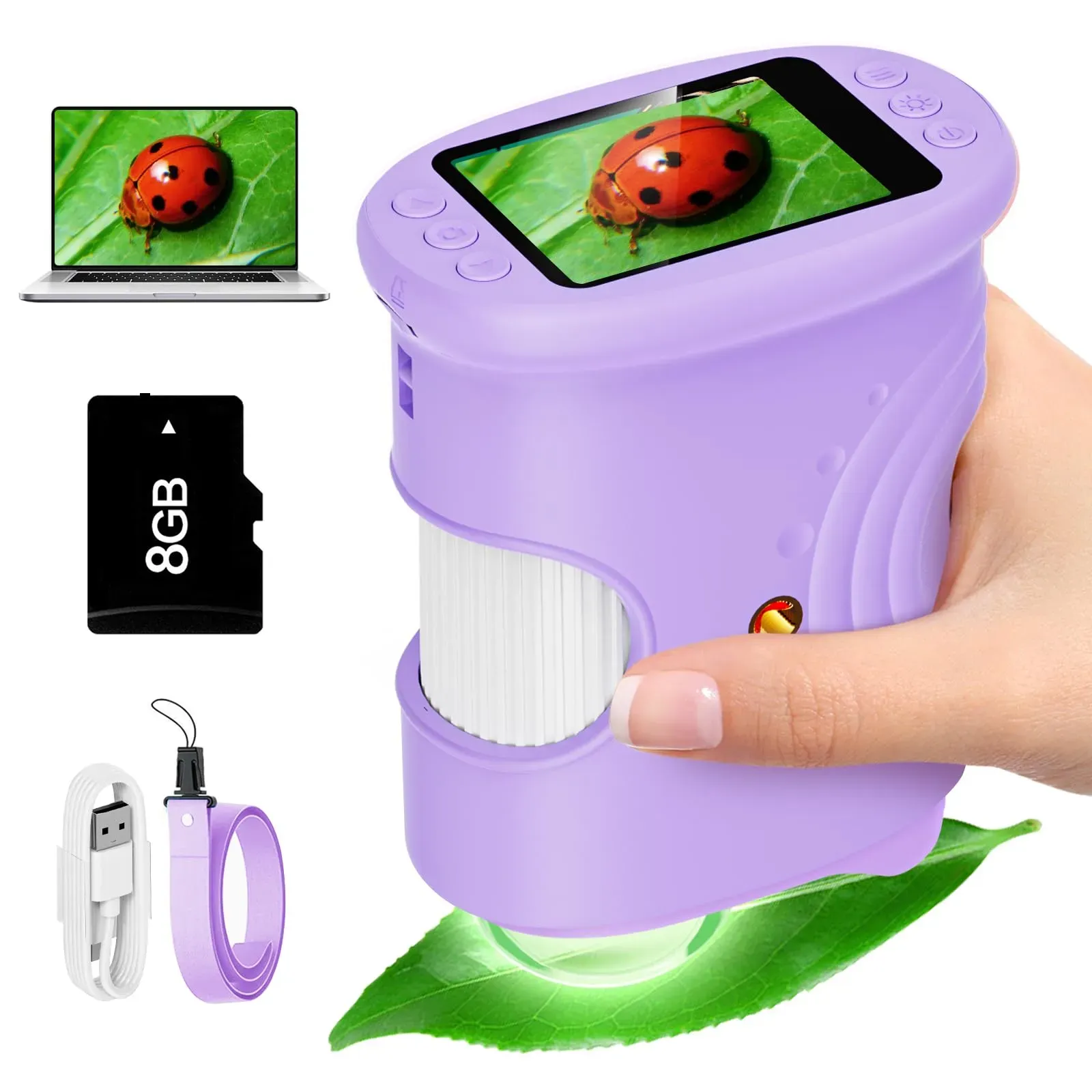
In short: a digital microscope for students needs to do three things on a student budget: capture photos you can put in a report, transfer them to a computer without drama, and survive being carried between halls, labs and field sites. A £30–£40 handheld with a built-in screen covers most coursework observation; know its limits (surfaces, not cells) before the submission deadline rather than after.
Why students buy their own scope at all
University and college equipment is usually bookable, shared and in the wrong building on the evening your write-up is due. If your project needs repeat observation — textile fibres week by week, leaf damage across sites, corrosion developing on samples — a personal device turns "when the lab is free" into "whenever the sample changes". The bar is not lab-grade imagery; it is a set of clear, dated, repeatable photos that support your argument.
What matters on a student budget
- Photo capture and easy transfer. The whole point is images in your report. Confirm the device saves standard files and moves them to a Windows 10/11 computer over USB — the Bebanghan 1000X handheld digital microscope (£32.00 inc. VAT, free UK delivery, 30-day returns) does exactly this, and its built-in 2-inch screen lets you check a shot is usable before you leave the field site.
- Battery and portability. A 700mAh rechargeable battery with USB-C charging means no hunting for lab sockets; at 168 g it disappears into a backpack pocket alongside the sample bags.
- Honest magnification. Advertised 1000x figures describe digital zoom. Fibres, leaf surfaces, print, solder and mineral grains photograph well in the genuinely useful 20x–150x band; do not choose between two budget devices based on the bigger printed number.
- The £40 ceiling is real. Below roughly £60 you are buying handheld digital scopes; £100–£300 buys student compound microscopes for slide work. There is very little worth buying between the categories, so decide by task, not by stretching budget.
The one question that decides everything: surfaces or cells?
Surfaces: textiles, materials, plant surfaces, insects, electronics, geology hand-samples — a handheld digital scope is the right tool and the cheap one. Cells and microorganisms: if your coursework specifies cell structure, staining or anything on a prepared slide, you need a compound microscope with transmitted light — no handheld will do it, at any digital zoom setting. If your module spans both, use the university's compound scopes for the slide sessions and your own handheld for everything the booking sheet cannot cover.
Making handheld images coursework-worthy
- Ask your tutor early whether device photos are acceptable as qualitative evidence — for most observational write-ups they are, provided methods are documented.
- Keep conditions constant: same distance, same lighting, same zoom step for every sample in a comparison set. Repeatability is what markers look for.
- Scale honestly: consumer on-screen rulers are not calibrated. Photograph a ruler at your standard setup once and reference it, or describe sizes qualitatively.
- Name files as you transfer:
site2-leaf-underside-2026-03-14.jpgis a methods section writing itself; connection and transfer steps are in our digital microscope software guide.
Where it keeps earning after the deadline
The same device covers the non-academic life of a student house surprisingly well: checking a laptop charging port for lint, inspecting a suspect solder joint on a keyboard, or photographing a coin from a market stall before paying collector money for it. If any of those become the main use, the specialist guides — usb microscope for electronics soldering and usb microscope for coins — pick up where this one stops. Parents shopping for a younger child should read the handheld digital microscope guide instead; the priorities differ.
Frequently Asked Questions
Will my tutor accept handheld microscope photos in coursework?
For qualitative, observational evidence, usually yes — provided your method section records device, distance, lighting and zoom. Ask before the data-collection week, not at submission; if the brief demands calibrated measurement or cell imaging, use the department's kit.
Can I measure samples with it?
Treat on-screen rulers as estimates: consumer units are not calibrated metrology. Photograph a ruler once at your standard setup and reference it, or describe sizes comparatively — markers respect honesty about limits.
Do I need a compound microscope instead?
Only if your project needs cells, staining or prepared slides — that is transmitted-light territory and no handheld reaches it. For fibres, surfaces, insects, materials and electronics, the handheld is the right instrument.
Does it work in the field without a laptop?
Yes — the built-in screen and rechargeable battery are the point. Check each shot is usable on the spot, then transfer everything to a Windows 10/11 machine back at your desk for the write-up.
Ready to try Bebanghan?
Shop Now — £32.00